
✍︎ About the Author · Swami Paramananda
Swami Paramananda was an Indian monk, teacher and writer born in 1884. A disciple within the Ramakrishna-Vivekananda tradition, he travelled to the United States and became active in presenting Vedanta philosophy to Western audiences. He founded centres devoted to spiritual study and wrote or translated works intended to make Indian philosophical teachings accessible to a wider readership. His English translation of selected Upanishads remains one of the early twentieth-century interpretations through which many readers encountered these ancient texts.
paperback
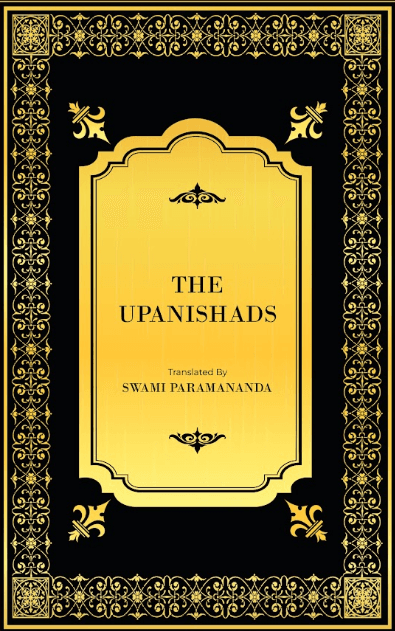
The Upanishads
by Swami Paramananda
The Upanishads are among the foundational philosophical and spiritual texts of ancient India. Composed across centuries, they explore some of the deepest questions of human existence: What is the self? What is ultimate reality? What does it mean to know, to live and to be free? Through dialogues, teachings, stories and meditative reflections, the Upanishads examine concepts such as Atman, Brahman, consciousness, knowledge and liberation. Their approach is often poetic rather than systematic, inviting contemplation as much as intellectual study. This translation by Swami Paramananda introduces these timeless texts in clear and accessible language. The Upanishads have influenced Indian philosophy for generations and continue to inspire readers interested in spirituality, consciousness and the search for inner understanding.
- Genre
- Philosophy / Spirituality / Indian Classics
- Series
- Nu Voice Paperback Classics
- Binding
- Paperback
- Pages
- 112
- ISBN
- 978-81-904006-4-0
- Combo eligible
- Yes
✍︎ About the Author · Swami Paramananda
Swami Paramananda was an Indian monk, teacher and writer born in 1884. A disciple within the Ramakrishna-Vivekananda tradition, he travelled to the United States and became active in presenting Vedanta philosophy to Western audiences. He founded centres devoted to spiritual study and wrote or translated works intended to make Indian philosophical teachings accessible to a wider readership. His English translation of selected Upanishads remains one of the early twentieth-century interpretations through which many readers encountered these ancient texts.